Computer vision company in Saudi ArabiaCameras that understand what they see.
Turn the cameras you already own into live counts, alerts and evidence.
Free first step. We reply within one business day. No commitment.
- 10 min
- of footage from one camera to start
- 4–6 weeks
- pilot on your footage, against agreed targets
Free first step
Show us one camera
- You give:
- Ten minutes of footage from one camera
- You get:
- A written read-out of what that camera could count, flag and record, with sample detections drawn on your own footage. Usually back to you within a week.
The problem
TQN is a computer vision company in Saudi Arabia that puts your existing CCTV to work. Our models run on edge hardware at your site, watch the feeds you choose and report what matters: who entered a restricted zone, who is missing a helmet, how long the queue is, which plate came through gate 2. Your team hears about it as it happens. Footage stays where it is.
- 01
Your cameras record everything and report nothing.
- 02
Incidents are found hours later, by someone scrubbing footage.
- 03
Safety, queue and occupancy figures still come from clipboards and estimates.
What TQN delivers
AI video analytics on the CCTV you already run
- 01
PPE detection
Know every time a helmet, vest or harness is missing. Each person in the zone is checked, and every breach is logged with a still and a time stamp.
- 02
People counting and occupancy
See how many people are in each area, now and by the hour. People are tracked across zones to report entries, exits and occupancy.
- 03
Queues and flow
Spot a long queue before customers walk away. We measure queue length, waiting time and movement between areas.
- 04
Zone rules and dwell time
Get an alert when someone enters a restricted area or stays too long. Zones are drawn on the camera view, with rules per zone and per shift.
- 05
Plate and code reading
Log every vehicle and container without a clerk at the gate. ANPR reads vehicle plates; OCR reads container codes, labels and meter displays.
- 06
Defect and corrosion inspection
Catch cracks, corrosion and surface defects before they become failures. Models trained on your assets flag each defect and grade it.
- 07
Fall and crowding alerts
Respond to a fall or a crowd build-up in the moment, not at the end of the shift. Behaviour alerts go straight to the people on duty.
- 08
Searchable footage
Find the moment in minutes, not hours. Search recorded events by zone, time, object type or plate number.
Free first step. Fixed scope after. You decide at each stage.
How it works
How CCTV analytics goes live on your site
- 1
Assess, free
Show us one camera. We review ten minutes of its footage and tell you what it can report, and what it cannot.
- 2
Pilot on your footage
Four to six weeks on your own cameras. Accuracy and false-alarm targets are agreed before we start and measured every week.
- 3
Deploy at the edge
Edge hardware goes in on site and models run locally. Alerts reach WhatsApp, SMS, email or your control room.
- 4
Connect your systems
Counts and events feed your POS, ERP, HSE register or BI tool, so the figures land where your teams already work.
- 5
Run and improve
We watch accuracy, retrain when conditions change, and add cameras, sites and use cases as you grow.
Before you ask
Five answers before the first call.
- 01What do I get?
- Live counts, alerts and evidence from the cameras you already own, sent to the channels your team uses: WhatsApp, SMS, email, your control room or your BI dashboards. Every alert carries a still or a short clip as proof.
- 02How fast?
- The pilot runs four to six weeks on your own footage. It closes with a report against the accuracy and false-alarm targets agreed before it began, measured as correct detections, missed events and false alarms per camera per day.
- 03What does it need from me?
- Access to the camera feeds in scope, space on site for edge hardware with power and network, one named owner on your side, and about an hour a week to review results with us.
- 04Where does my data go?
- Video is analysed on site. What leaves the site, and where it is stored, is agreed in writing during the assessment. Faces are blurred by default.
- 05What does it cost to start?
- The one-camera read-out is free. The pilot is fixed scope and priced before it starts, so you know the full cost before you commit.
Still have a question? Add it to your request. We reply within one business day.
Use cases by industry
PPE detection, ANPR and people counting at work
- Logistics and warehouses
Loading bays that log themselves
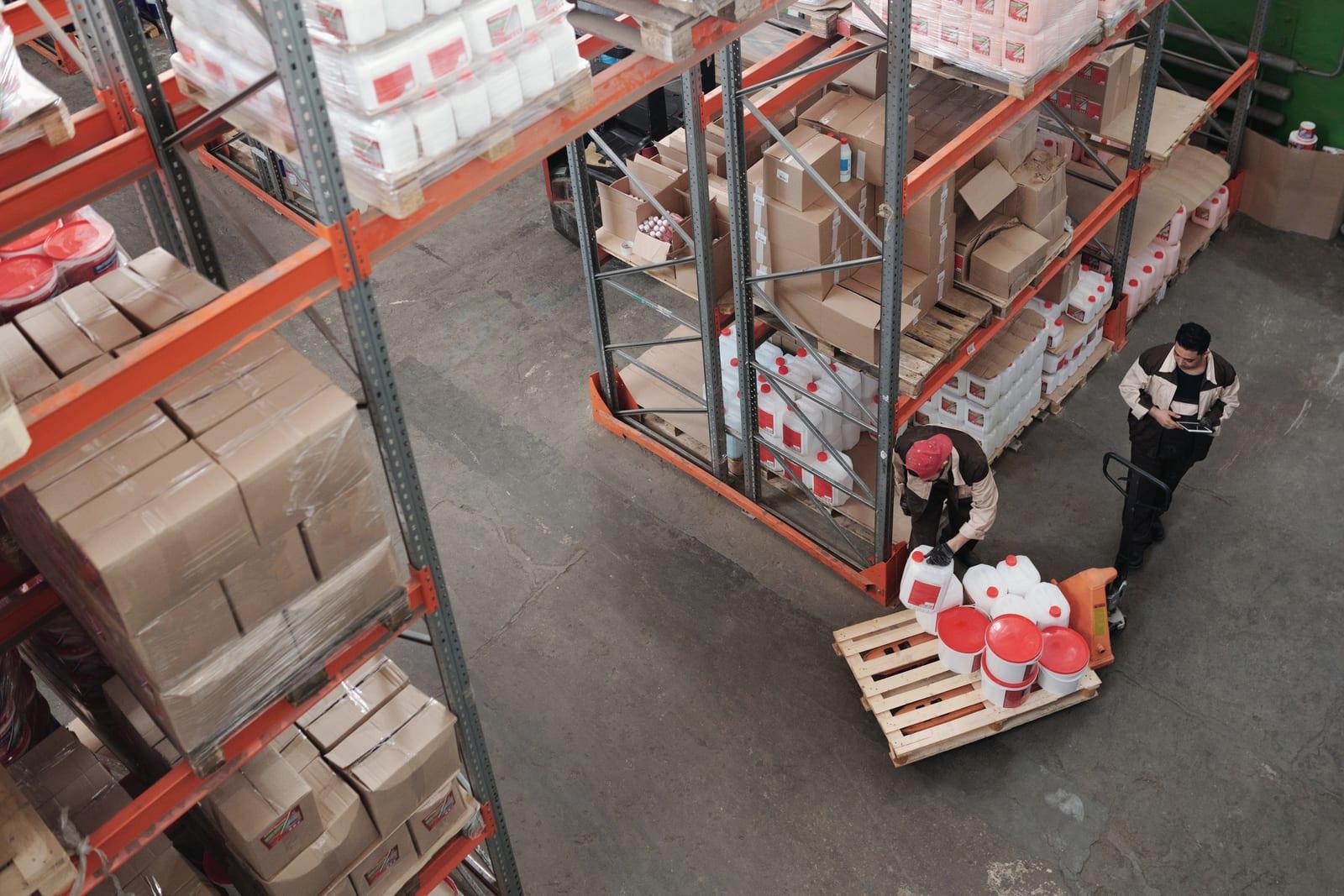
Every truck plate, dock time and safety breach recorded without paperwork. ANPR at the gate, dwell time at each dock, helmet and vest checks on the floor.
View industry - Oil, gas and industrial
PPE and exclusion zones on the plant floor
Breaches reach the HSE team with evidence and are written into the HSE register. Inspection cameras flag corrosion on pipework and structures.
View industry - Retail and malls
Footfall, occupancy and queues by the hour
Know which entrances, floors and stores draw visitors, and when to open another till. Counts feed your BI tool; no faces are stored.
View industry - Food and beverage
Kitchen hygiene and waiting times
Hairnet, glove and mask checks in central kitchens. Queue length and waiting time at the counter, set against POS data.
View industry - Construction and giga-projects
Site safety across large workforces
Zone rules around cranes and excavations, PPE checks at site gates, and headcount per zone at muster points during drills.
View industry
Industries we serve
Assessment and pilot
What the free assessment covers. What the pilot report contains.
The free assessment covers: Show us one camera
- Whether the camera's angle, resolution and lighting support reliable detection
- Which events it could count, flag or record today
- Sample detections drawn on your own footage
- The edge hardware and network the site would need
- The accuracy and false-alarm targets we would propose for a pilot
The pilot report contains
- Correct, missed and false detections, per camera and per use case
- False alarms per camera per day, against the agreed target
- Time from event to alert on your own network
- Sample alerts with their evidence clips
- A deployment plan and fixed scope for further cameras and sites
Data, privacy and compliance
Your data stays where you decide.
- Faces are blurred by default in every stored clip and still.
- No face matching or identification unless you request it and it is lawful for your use case.
- Video is analysed on site. What leaves the site, and where it is stored, is agreed in writing during the assessment.
- You set retention periods and access roles, and every access is logged.
- Designed to support PDPL and NCA requirements, with data flows documented for your compliance team.
FAQ
Questions buyers ask us.
In most cases, yes. We connect to standard IP camera streams and recording systems, so your cameras and recorder stay as they are. The free read-out confirms whether each camera's angle, resolution and lighting are good enough. Where one is not, we tell you what to move or change.
No. Video is analysed on site. What leaves the site, and where it is stored, is agreed in writing during the assessment. Nothing is sent outside Saudi Arabia, and your footage is not used to train models for anyone else.
The one-camera read-out usually comes back within a week. The pilot then runs four to six weeks on your footage: alerts start in the first weeks, and the remaining time goes to measuring and tuning against the agreed targets.
Little. Your IT team grants camera access and space for the edge hardware once. Operations or HSE names one owner, who reviews alerts with us for about an hour a week during the pilot.
You receive a report against the targets agreed at the start. If they are met, we propose a fixed scope to roll out to more cameras and sites. If they are not, you have the data that shows why, and no obligation to continue.
A fixed-scope pilot, then a deployment and a running service agreement covering accuracy monitoring, model updates, hardware support and new use cases. One TQN team is accountable from the first camera to the last site, with response times written into the agreement.
Other practices
Five practices, built to run in production in Riyadh.
- 02
Cybersecurity
Find and fix the gaps an attacker could use, before an attacker or auditor does.
View practice - 03
Quality Engineering
Tests that write, run and repair themselves, so every release ships on time.
View practice - 04
AI Agents
Agents that answer, process and report in Arabic and English, inside your rules.
View practice - 05
ERP and PMO
Cost, procurement and schedule in one view, so overruns show while you can act.
View practice
Start here
Start with one problem. We will show you the result.
Tell us the problem in one line. We reply within one business day with the free first step that fits it.
Already have systems? We connect to the IP cameras and recorders you already run.
Need proof first? The first step is free, and pilot targets are agreed in writing before work starts.
Concerned about data? Video is analysed on site. What leaves the site, and where it is stored, is agreed in writing during the assessment.
Is Arabic a must? We work, report and deliver in Arabic and English.